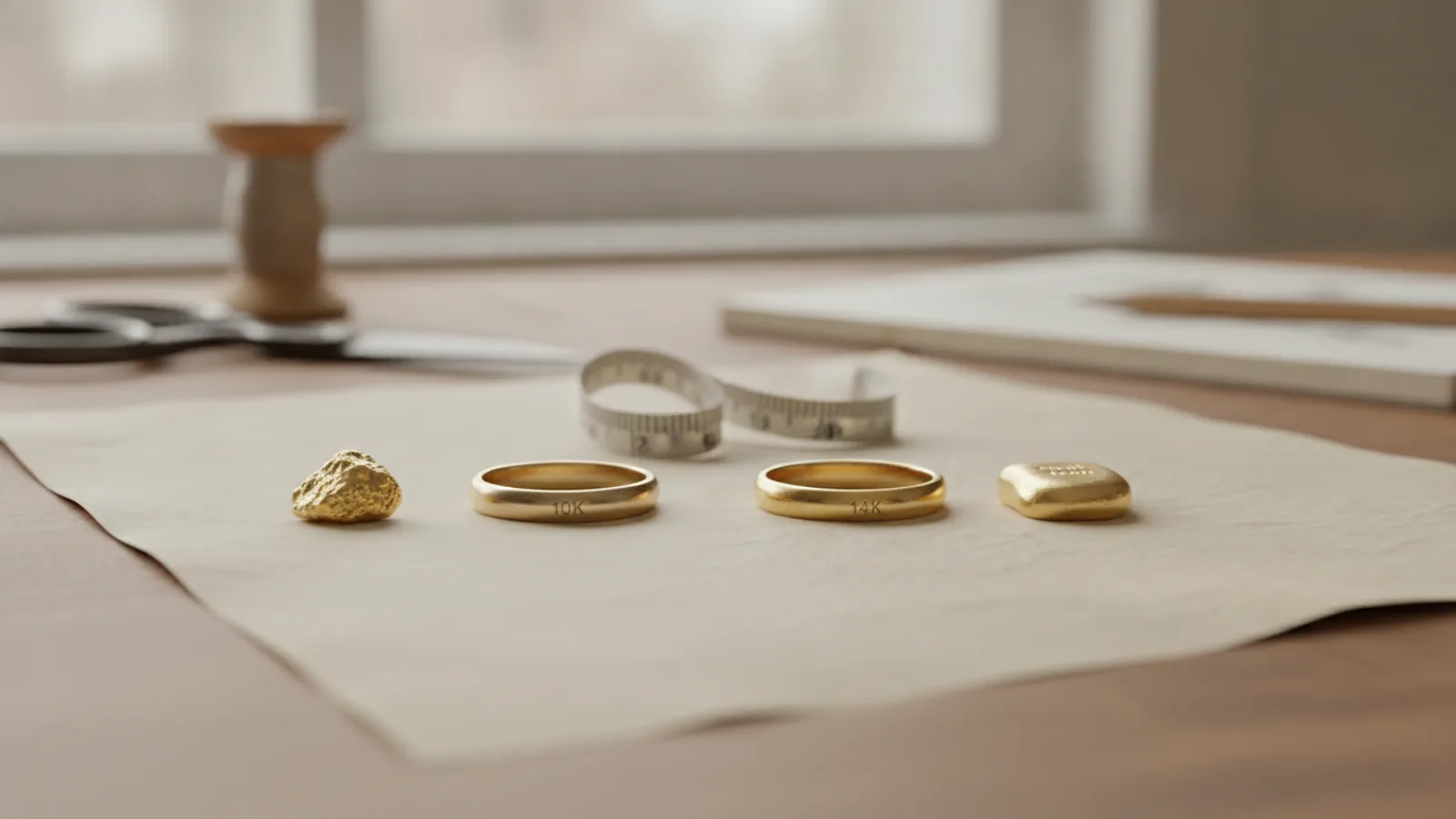
10k vs 14k Gold: Which Should You Choose?
A practical head-to-head comparison of 10k and 14k Gold, covering quick verdict, key differences, category winners, buyer fit, and FAQ.
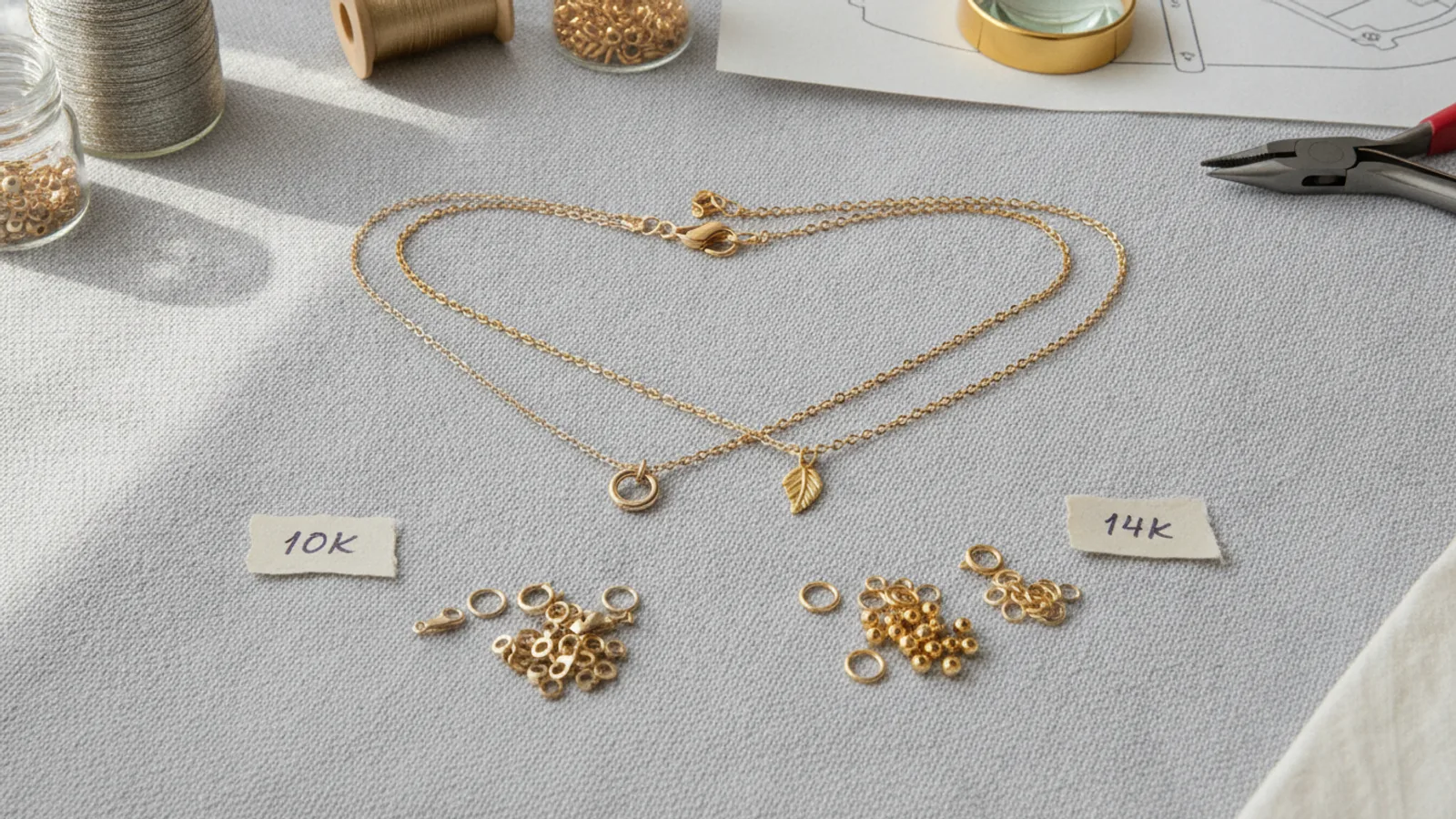
10k vs 14k Gold: Which Should You Choose?
Head-to-head comparison
Overall winner: 14k Gold for its ideal balance of rich colour, durability, and intrinsic value.
For most people buying or making fine jewellery, 14k gold offers the best combination of features. It has a beautiful, rich yellow hue and is durable enough for frequent wear. However, 10k gold is an exceptionally tough and affordable alternative, making it the superior choice for those with very active lifestyles or stricter budgets.
This comparison is based on the official metallurgical properties of gold alloys, current market standards in the UK, and extensive analysis of jeweller recommendations and long-term owner feedback. We've examined the practical differences to help you choose the right material for your next project or purchase.
When you're looking at gold jewellery, it's almost never pure 24k gold. Pure gold is incredibly soft, so it's mixed with other metals—called alloys—to make it strong enough to wear. The 'k' stands for karat, which measures the purity of the gold. 10k and 14k are two of the most popular choices, but they represent a core trade-off: durability and price versus purity and colour. While we've picked an overall winner, the best option for you depends entirely on how you'll wear the piece, your skin sensitivity, and your budget.
Option A
10k Gold
- Best for everyday durability
- Most affordable gold option
- Paler, more subtle colour
Option B
14k Gold
- Best for fine jewellery
- Rich, classic gold colour
- The industry standard balance
Head-to-Head Scorecard
10k vs 14k Gold: Key Differences
Understanding the fundamental difference between 10k and 14k gold is simple: it’s all about the ratio of pure gold to other metals. This ratio affects everything from the item's colour to its strength.
- 10k Gold is composed of 10 parts pure gold and 14 parts other metals. This means it is 41.7% pure gold (10 divided by 24). The remaining 58.3% is a mix of alloys like silver, copper, nickel, and zinc, which give it exceptional hardness.
- 14k Gold is composed of 14 parts pure gold and 10 parts other metals. This makes it 58.3% pure gold (14 divided by 24). With less alloy content than 10k, it is slightly softer but has a much richer, more traditionally "golden" appearance.
This difference in composition is the source of all the pros and cons we'll explore. The higher alloy content in 10k gold makes it tougher and cheaper, while the higher gold content in 14k gold makes it more valuable, more vibrant in colour, and less likely to cause skin reactions. Choosing between them is a matter of prioritising these traits based on your needs.
Measurement Winners for 10k vs 14k gold
We've broken down the comparison into five key areas that matter most to anyone buying or making jewellery. Here’s how 10k and 14k gold stack up against each other in detail.
Routine Fit
Durability & Hardness
When it comes to crafting or choosing a piece of jewellery that will be worn daily, especially on the hands, durability is paramount. Hardness in metals is measured on the Mohs scale, and while gold itself is very soft (around 2.5), the alloys mixed with it increase its hardness significantly.
10k gold contains a higher percentage of these strengthening alloys (58.3%) compared to 14k gold (41.7%). Metals like copper, zinc, and nickel are much harder than pure gold. The result is that 10k gold is measurably harder and more resistant to scratches, scuffs, and bending than 14k gold. If you work with your hands, have a very active job, or are simply prone to being a bit rough with your jewellery, a 10k gold piece will withstand the abuse far better. It's an excellent, practical choice for rings, bracelets, and chains that are meant to be lived in rather than saved for special occasions.
14k gold is by no means a fragile material. It is the most popular choice for engagement rings in the UK for a reason—it offers a fantastic blend of strength and beauty. It's perfectly suitable for daily wear for most people. However, when compared directly on the basis of pure toughness and scratch resistance, the higher alloy content of 10k gives it the clear advantage.
Formula or Feature
Gold Purity & Colour
The defining visual characteristic of gold is its beautiful, warm, yellow lustre. The intensity of this colour is directly related to the amount of pure gold in the alloy. This is where 14k gold truly shines.
With 58.3% pure gold, 14k gold has a rich, saturated yellow colour that most people associate with classic gold jewellery. It’s warm, vibrant, and has a noticeable depth that speaks to its value. This makes it the preferred choice for pieces where the beauty of the gold is a central feature, such as wedding bands, engagement ring settings, and elegant necklaces.
In contrast, 10k gold, with only 41.7% pure gold, has a visibly paler and more subtle yellow hue. The larger amount of silver, copper, or zinc in the mix dilutes the warm tones of the gold. While some people prefer this understated look, it can appear less luxurious when placed side-by-side with a 14k piece. The difference is distinct enough that a trained eye can often tell them apart immediately. For rose gold and white gold, the colour difference is less pronounced, but for traditional yellow gold, 14k offers a far more classic and striking appearance.
Ease of Use
Hypoallergenic Properties
For many makers and wearers, how a material interacts with the skin is a crucial consideration. Metal allergies are common, and the most frequent culprit in jewellery is nickel, an alloy often used to strengthen and whiten gold. Since skin sensitivity is a reaction to the alloy metals rather than the gold itself, the purity of the gold plays a big role.
14k gold is generally the safer choice for people with sensitive skin. Because it contains only 41.7% alloy metals, there is a lower concentration of potential irritants like nickel or zinc. While not completely allergen-proof, the risk of a reaction is substantially lower. Most people with mild metal sensitivities can wear 14k gold comfortably without any issues.
10k gold, with 58.3% alloy content, poses a higher risk. The greater percentage of non-gold metals means a greater chance of including a significant amount of nickel. If you have a known nickel allergy or very sensitive skin, 10k gold jewellery, especially pieces worn tightly against the skin like rings or earrings, might cause redness, itching, or irritation. It's a key "supply caveat" to consider when gifting a piece or choosing a material for your own everyday wear.
Value
Affordability
Budget is often a deciding factor in any creative project or purchase. The price of a gold item is primarily driven by its "melt value"—the market price of the pure gold it contains. This makes the comparison on affordability very straightforward.
10k gold contains less pure gold than 14k gold. Consequently, it is always the more affordable option. For a piece of the same weight and design, a 10k gold version can be anywhere from 20% to 40% less expensive than its 14k counterpart. This price difference can be substantial, especially for heavier items like chains or large rings.
This makes 10k gold an excellent material for several situations. It allows makers to offer gold pieces at a more accessible price point. For buyers, it means you can get the look and feel of real gold without the higher investment. It's a fantastic entry point into fine jewellery or a way to afford a larger, more substantial piece that might be out of reach in 14k. While 14k gold offers more intrinsic value, 10k gold offers better upfront value and accessibility.
Buyer Confidence
Prestige & Resale Value
Beyond the practical considerations, jewellery often carries sentimental and financial weight. The perception of quality, prestige, and long-term value can be just as important as durability or colour.
In the world of fine jewellery, 14k gold is widely regarded as the industry standard, especially in the UK and US markets. It strikes the perfect balance that consumers and jewellers appreciate: beautiful, valuable, yet practical. Because it contains over 50% pure gold, it is seen as a more "premium" material than 10k gold. This perception directly impacts its resale value. Since the value of gold is tied to its purity, a 14k piece will always be worth more than an identical 10k piece when sold or appraised, as it simply contains more of the precious metal.
10k gold is the minimum standard to be legally sold as "gold" in the UK and many other countries. While it is certainly real gold, it is sometimes perceived as a "budget" option and carries less prestige. For a milestone purchase like an engagement ring or a family heirloom, 14k (or even 18k) gold is typically the preferred choice to signify importance and lasting value.
Choose 10k Gold If...
- You have a very active lifestyle or job. Its superior hardness makes it ideal for anyone who works with their hands or is worried about scratches and dents.
- Your budget is a primary concern. 10k offers the beauty of real gold at a significantly lower price point, making it more accessible.
- You are buying for a child or teenager. The combination of durability and lower cost makes it a practical choice for a first piece of fine jewellery.
- You prefer a paler, more subtle gold colour. Some people enjoy the understated hue of 10k gold over the saturated yellow of higher karats.
Choose 14k Gold If...
- You are buying an engagement ring or wedding band. 14k is the industry standard, offering the perfect blend of beauty, durability, and value for such a significant piece.
- You want a rich, classic gold colour. The vibrant, warm yellow of 14k gold is what most people picture when they think of fine jewellery.
- You have sensitive skin or a known nickel allergy. The lower alloy content makes it a much safer, more hypoallergenic choice.
- Long-term value and prestige are important to you. Its higher gold content means it will always have a greater intrinsic and resale value than 10k gold.
Choose 10k If
- You want the stronger default fit after checking the current evidence.
- You care about broader usefulness across the main comparison criteria.
- You prefer the option with clearer decision support for most readers.
Choose 14k Gold If
- Your situation matches 14k Gold's narrower strength more closely.
- You prefer a simpler starting point with fewer tradeoffs to manage.
- You have verified the current details and they fit your specific priority.
Final Verdict: 10k vs 14k Gold
After a detailed comparison, 14k gold stands out as our overall winner. It represents the sweet spot for fine jewellery, delivering a beautiful rich colour, good durability suitable for most people's daily lives, and a higher intrinsic value. For significant purchases like engagement rings, anniversary gifts, or heirloom pieces, the quality and classic appearance of 14k gold make it the superior choice.
However, this does not diminish the value of 10k gold. It is an incredibly practical and intelligent choice in the right circumstances. Its exceptional toughness makes it the undisputed champion for anyone who needs their jewellery to withstand serious wear and tear. Furthermore, its affordability opens the door to owning beautiful, genuine gold pieces for those on a tighter budget. It is not "lesser" gold; it is simply a different alloy formulated for a different purpose.
Ultimately, your choice in the 10k vs 14k gold debate should be guided by your personal priorities. If you value colour, biocompatibility, and prestige, choose 14k. If you prioritise durability and affordability above all else, 10k is an excellent and resilient option.
10k vs 14k Gold: Which Should You Choose? FAQ
Is 10k gold considered "real" gold?
Yes, absolutely. 10k gold is real gold. To be legally marketed as gold jewellery in the UK and most other countries, an item must have a minimum purity of 10 karats. This means it contains 41.7% pure gold, with the remainder being other durable metals. It will be stamped with a "10k" or "417" hallmark to certify its authenticity.
Can you visually tell the difference between 10k and 14k gold?
Often, yes. When placed side-by-side, 14k yellow gold has a noticeably richer, warmer, and more saturated yellow colour due to its higher gold content. 10k yellow gold appears paler and more subtle in comparison. For white gold or rose gold, the difference in colour is much less distinct and can be difficult to spot.
Which is better for an engagement ring, 10k or 14k gold?
For most people, 14k gold is the better choice for an engagement ring. It offers the ideal combination of rich colour, prestige, and durability needed for such a significant piece. However, if the wearer has an extremely active job (such as a mechanic, construction worker, or athlete), the superior toughness of 10k gold could be a more practical option to prevent scratches and damage.
Does 10k gold tarnish more easily than 14k gold?
Pure gold does not tarnish. Tarnishing is a reaction of the alloy metals, particularly silver and copper, to oxygen and sulphur in the air. Because 10k gold has a higher percentage of these other metals, it has a slightly higher propensity to tarnish over a very long time compared to 14k gold. However, with modern alloys and regular cleaning, tarnishing is rarely an issue for either metal.
Is 10k gold strong enough for stone settings?
Yes, 10k gold is more than strong enough for setting gemstones. In fact, its hardness makes its prongs very durable and secure. Jewellers work with it regularly, and it is a reliable choice for holding stones safely in place, even in rings that are worn daily.
How do I clean and care for 10k and 14k gold jewellery?
The cleaning process for both 10k and 14k gold is identical. The best method is to use a simple solution of warm water and a few drops of mild dish soap. Let the jewellery soak for 15-20 minutes, then gently scrub with a soft-bristled toothbrush. Rinse thoroughly with clean water and pat dry with a soft, lint-free cloth. Avoid harsh chemicals or abrasive cleaners.