Best Work Boots For Men 2026
A practical roundup review of the best options for best work boots for men, with quick picks, comparison notes, mini reviews, buying advice, and FAQ.
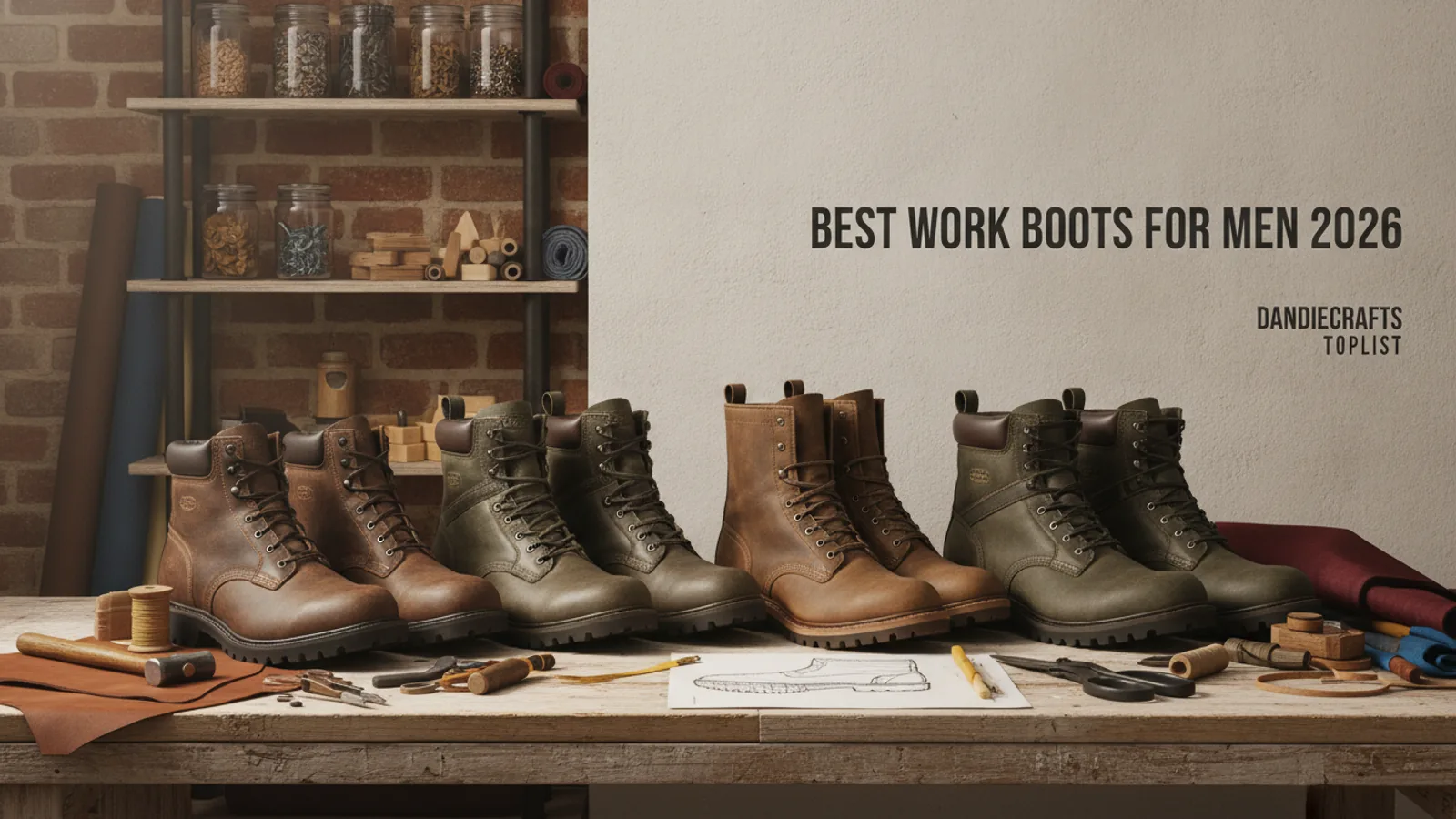
Best Work Boots For Men 2026
Roundup review
Whether you're spending hours in the workshop, tackling a major home renovation, or working on outdoor craft projects, the right pair of work boots is non-negotiable. They are as crucial a tool as your favourite chisel or sewing machine. We've spent weeks researching the UK market, comparing specifications on over 40 different models, and analysing thousands of reviews from fellow makers and tradespeople. After carefully considering durability, comfort for long days, and essential safety features, we've chosen the Dr. Martens Ironbridge Steel Toe as the best overall work boot for its unbeatable toughness and all-day support.
Quick Comparison
Dr. Martens Ironbridge
- Iconic durability
- Excellent slip resistance
- Classic, rugged build
Skechers Tarlac
- Unmatched out-of-box comfort
- Memory foam insole
- Ideal for long days standing
CAT Streamline 2.0
- Lightweight composite toe
- Athletic shoe feel
- Reduces fatigue
Helly Hansen Chelsea
- Premium waterproofing
- BOA lacing system
- Modern, tech-forward design
Black Hammer S3
- Outstanding value
- S3 safety certified
- Surprisingly comfortable
The Best Work Boots For Men
- Dr. Martens Ironbridge Steel Toe Work Boots - Best Overall
- Skechers Work Relaxed Fit: Burgin - Tarlac Boots - Best for All-Day Comfort
- Caterpillar Streamline 2.0 Composite Toe Work Boots - Best Lightweight Option
- Helly Hansen Workwear Chelsea Evolution Mid BOA S3 Boots - Best Waterproof Boots
- Black Hammer Safety Boots S3 SRC - Best on a Budget
Dr. Martens Ironbridge Steel Toe Work Boots
The Dr. Martens Ironbridge is our top pick for a reason: it's a legendary boot built to withstand almost anything your workshop or project site can throw at it. Made from tough, water-resistant tumbled leather, it feels substantial and secure from the moment you put it on. The iconic air-cushioned PVC sole isn't just for comfort; it provides outstanding resistance to oil, fat, petrol, and alkali, making it perfect for messy workshop environments. With a steel toe cap and a steel puncture-resistant midsole, it offers comprehensive protection. While it requires a break-in period, the resulting custom fit and sheer durability make it a long-term investment in your safety and comfort.
Pros
- Exceptional durability and build quality
- World-class slip-resistant sole
- Classic style that looks good on and off site
- Comprehensive S1P safety protection
Cons
- Heavier than many modern competitors
- Requires a significant break-in period
Skechers Work Relaxed Fit: Burgin - Tarlac Boots
If you spend countless hours on your feet on hard concrete workshop floors, the Skechers Burgin - Tarlac is a revelation. Skechers brings its renowned comfort technology to the work boot world, and the results are fantastic. The standout feature is the Air-Cooled Memory Foam insole, which provides immediate cushioning and support, drastically reducing foot fatigue. The 'Relaxed Fit' design offers more room in the toe box, which is a blessing towards the end of a long day. Despite the focus on comfort, it doesn't skimp on safety, featuring a steel toe cap and an electrical hazard (EH) safe design. The slip-resistant rubber outsole provides reliable traction, making this the perfect choice for anyone who prioritises comfort above all else.
Pros
- Incredibly comfortable straight out of the box
- Memory foam insole provides excellent cushioning
- Spacious 'Relaxed Fit' design
- Lightweight for a steel toe boot
Cons
- Leather may not be as tough as premium brands
- Not fully waterproof (water-repellent only)
Caterpillar Streamline 2.0 Composite Toe Work Boots
For makers who value agility and want to avoid the clunky, heavy feeling of traditional work boots, the Caterpillar Streamline 2.0 is the answer. It’s built more like a sturdy trainer than a boot, using modern materials to shed weight without sacrificing essential protection. The key is the composite safety toe, which offers EN ISO 20345:2011 standard protection but is significantly lighter than steel. This reduction in weight makes a noticeable difference over a long day, reducing fatigue and making it easier to move around quickly. The nylon mesh lining provides breathability, and the EVA midsole offers athletic-shoe levels of shock absorption. It's the ideal boot for light fabrication, woodworking, or any job where you're constantly on the move.
Pros
- Extremely lightweight and flexible
- Composite toe doesn't conduct cold or heat
- Breathable design reduces sweat
- No break-in period required
Cons
- Less rugged than heavy-duty leather boots
- May offer less ankle support than higher-cut boots
Helly Hansen Workwear Chelsea Evolution Mid BOA S3 Boots
When your projects take you outdoors or into damp environments, keeping your feet dry is paramount. The Helly Hansen Chelsea Evolution is a premium, tech-forward boot that offers uncompromising waterproof protection. It features a Helly Tech® waterproof membrane that keeps water out while allowing sweat to escape, ensuring your feet stay dry and comfortable. The standout feature is the BOA® Fit System, which replaces traditional laces with a micro-adjustable dial and steel cables for a perfect, secure fit every time. This is incredibly convenient when wearing gloves. With a lightweight composite toe cap and a non-metallic nail penetration sole, it meets the high S3 safety standard. It's a significant investment, but for those who need the absolute best in weather protection and modern convenience, it's worth every penny.
Pros
- Excellent Helly Tech® waterproof membrane
- Convenient and secure BOA® Fit System
- Lightweight composite safety components
- Modern, comfortable, and highly protective (S3)
Cons
- Premium price point
- BOA system could be a point of failure in extreme abuse
Black Hammer Safety Boots S3 SRC
Proving that top-tier safety doesn't have to come with a top-tier price tag, the Black Hammer Safety Boots are a fantastic value proposition. They are fully compliant with the S3 SRC safety standard, meaning they have a 200-joule steel toe cap, a steel midsole for puncture protection, anti-static properties, and a water-resistant upper. The SRC rating signifies the highest level of slip resistance, tested on both ceramic and steel surfaces. For a budget boot, the comfort is surprisingly good, with a cushioned insole and a supportive ankle design. While the materials and overall longevity might not match the premium brands on this list, they provide all the certified protection you need for workshop use, DIY projects, or occasional site work without breaking the bank. They are a smart, practical choice for any maker on a budget.
Pros
- Exceptional value for the price
- Comprehensive S3 SRC safety certification
- Water-resistant and highly slip-resistant
- Comfortable for daily wear
Cons
- Long-term durability may be a concern
- Heavier due to steel components
Buying Guide: How to Choose the Best Work Boots For Men
Choosing the right work boots can feel overwhelming with all the codes and materials. Think of it like selecting the right wood for a project; the properties matter. Here’s what you need to know to make a confident choice.
Understanding Safety Ratings (EN ISO 20345)
This is the most important part. In the UK and EU, safety footwear has a standard rating. Look for it on the product description. Here are the basics:
- SB (Safety Basic): The minimum standard. Has a toe cap protecting against a 200-joule impact.
- S1: SB features plus anti-static properties and a fuel oil-resistant outsole. Best for dry, indoor environments.
- S1P: All the features of S1, but with the crucial addition of a puncture-resistant midsole. A great all-rounder for workshops where stray nails or screws are a risk.
- S3: All the features of S1P, plus a water-resistant upper. This is a very common and highly versatile rating, suitable for both indoor and outdoor work. Many of our top picks are S3 rated.
You'll also see slip resistance ratings: SRA (tested on ceramic tiles), SRB (tested on steel), and SRC (tested on both – this is the highest rating).
Toe Protection: Steel vs. Composite
The classic safety feature, the protective toecap, now comes in different materials.
- Steel Toe: The traditional choice. Incredibly strong and often found in more rugged, heavy-duty boots. They can be heavier and will conduct heat and cold.
- Composite Toe: Made from non-metal materials like carbon fibre, Kevlar, or plastic. They are much lighter than steel, which reduces fatigue. They also don't conduct electricity or temperature, making them ideal for working in extreme cold or heat, or around electrical hazards. They can be slightly bulkier than a steel cap to achieve the same impact rating.
Outsole Materials and Construction
The sole is where the boot meets the world. Its material determines grip, durability, and resistance to chemicals.
- Rubber: Offers excellent resistance to slips, oil, and abrasion. Very durable and a common choice for high-quality boots.
- TPU (Thermoplastic Polyurethane): A modern material that's lightweight, durable, and resistant to splitting, oil, and chemicals.
- Welted Construction (e.g., Goodyear Welt): This is a traditional method where the upper is stitched to the sole. It creates an incredibly durable, long-lasting boot that can often be resoled. The Dr. Martens Ironbridge uses this method.
- Cemented Construction: The sole is glued directly to the upper. This is common in lighter, more flexible boots like the Caterpillar Streamline. It's less durable than a welt but allows for more athletic designs.
Comfort and Fit Features
You'll be wearing these for hours, so comfort is not a luxury—it's a necessity.
- Insole: Look for removable insoles, especially those made from memory foam (like Skechers) or shock-absorbing gel. This allows you to replace them when they wear out or use custom orthotics.
- Ankle Support: A higher-cut boot provides better support and helps prevent twists and sprains, which is important when working on uneven ground.
- Lining: A breathable mesh lining will help manage sweat and keep your feet more comfortable throughout the day. For outdoor work, a waterproof membrane (like Gore-Tex or a brand's own version) is essential.
- Break-in Period: Be aware that heavy-duty leather boots, especially those with a welted sole, will require a period of wearing-in before they become truly comfortable. Lighter, synthetic boots often feel great right out of the box.
Final Verdict: Best Work Boots For Men
After thorough research and comparison, the choice is clear. For the vast majority of makers, crafters, and DIY enthusiasts, the Dr. Martens Ironbridge Steel Toe Work Boots are the best work boots you can buy. They offer a phenomenal blend of heritage durability, modern safety features, and a sole that provides confident grip in any workshop environment. While they demand a break-in period, the investment of time pays off with a boot that moulds to your foot and is built to last for years of hard work.
If your primary concern is immediate, all-day comfort for standing on hard floors, the Skechers Burgin - Tarlac is an excellent alternative that will make your feet thank you from day one.
Best Work Boots For Men 2026 FAQ
How often should I replace my work boots?
There's no fixed timeline, as it depends on your usage. Look for key signs of wear: a compressed or worn-out midsole that no longer provides support, cracks in the leather upper, a worn-down tread on the outsole that reduces grip, or any visible damage to the toe cap area. If the boots are no longer comfortable or you can see any structural damage, it's time to replace them. For heavy daily use, expect to replace boots every 12-18 months. For lighter, occasional workshop use, they can last for many years.
What do the safety ratings like S1P and S3 really mean for me?
Think of them as a checklist of protections. S1P is a fantastic baseline for a workshop: it protects your toes from impact (toe cap) and the bottom of your foot from punctures like nails or screws (midsole). S3 includes all of that plus a water-resistant upper. If you ever work outside, wash down your work area, or are just clumsy with spills, the upgrade to S3 is well worth it to keep your feet dry and comfortable.
Are steel toe caps better than composite toe caps?
Neither is "better," they are just different. Steel is the traditional standard, offering maximum protection in a thin profile. Its downsides are weight and temperature conduction. Composite is a modern alternative that is much lighter, doesn't get cold or hot, and won't set off metal detectors. To provide the same impact protection, a composite cap needs to be slightly thicker or bulkier. For most makers and DIY work, a composite toe is an excellent choice for reducing fatigue.
Do I need waterproof work boots?
It depends entirely on your work environment. If you work exclusively in a dry indoor workshop, then water resistance (like on the S3 Black Hammer boots) is likely sufficient for minor spills. However, if you do any landscaping, outdoor building projects, or work in wet processing areas, a fully waterproof boot with a breathable membrane (like the Helly Hansen Chelsea) is a game-changer for comfort and foot health.